
How to Describe the Feeling of Crying: A Sensory Guide to Breaking Hearts

If you are wondering exactly how to describe the feeling of crying, the secret lies in focusing on the raw, physical sensations rather than just the tears themselves. In creative writing, relying on overused phrases like “tears streamed down her face” diminishes the emotional impact of the scene and pulls the reader out of the story.
We discovered that utilizing precise sensory details and embracing the show don’t tell principle transforms a basic emotional response into a visceral experience for the reader. However, avoiding clichés is only half the battle.
Just like the anxiety-induced crying portrayed in Inside Out 2, there is one hidden physical symptom preceding the tears that most novice writers completely ignore—and it determines whether your scene falls flat or shatters hearts.
Contents
- What Does Crying Actually Feel Like?
- The Build-Up: Heat Behind the Eyes and the Lump in the Throat
- The Release: Shaky Breaths and Heaving Chests
- How to Use Show, Don’t Tell for Emotional Release
- 7 Metaphors to Avoid Clichés Like the Plague
- Types of Tears: Grief, Joy, and Overwhelm
- The Aftermath: Exhaustion and Catharsis
- Frequently Asked Questions (FAQ)
What Does Crying Actually Feel Like?
To craft a compelling scene, you must intimately understand the physical symptoms your character undergoes before a single tear falls. A genuine emotional reaction rarely starts in the eyes; it begins deep within the body as an uncontrollable physical response.
Before the weeping begins, your character might experience a dry, restrictive lump in throat that makes swallowing painful. This sensation is typically followed by burning eyes, where the heat builds up behind the eyelids, begging for release.
If you want your protagonist’s emotional journey to mean something—or to be worth anything to your audience—you must ground these internal sensations before describing the external weeping.
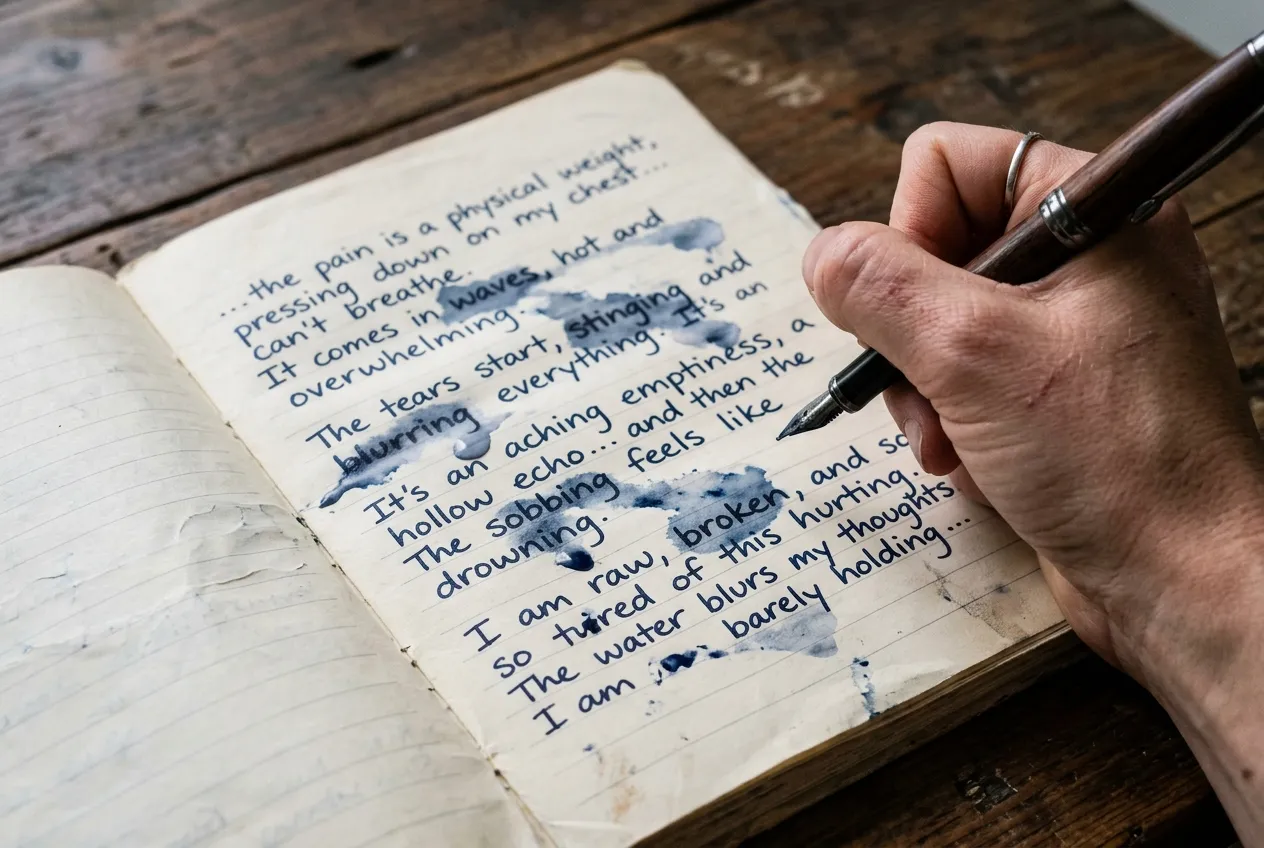
The Build-Up: Heat Behind the Eyes and the Lump in the Throat
The anticipation of tears often carries more tension than the act itself. Medically known as the globus sensation, that tight knot in the throat occurs when the vocal cords tense up under extreme stress.
As a writer, capturing this buildup creates a powerful connection with the reader. Describe how the character’s jaw clenches or how the pressure builds behind their sinuses.
Just as you might carefully research how to address the honourable in formal correspondence, you must approach your character’s physiological responses with equal precision and care.
The Release: Shaky Breaths and Heaving Chests
Once the tears break free, the body loses control. This is where the infamous ugly cry takes over, shattering any facade of composure your character maintained.
Instead of just stating that they wept, illustrate the sharp, shaky breath they take as they struggle to pull air into their lungs. Paint a picture of a heaving chest as their body spasms with each sob.
These raw, uncontrolled movements communicate profound distress far better than describing a simple wet cheek.
How to Use Show, Don’t Tell for Emotional Release
Mastering the mechanics of an emotional release requires restraint. Let the physical environment interact with the character’s distress to ground the scene in reality.
Show how their hands tremble as they grip a coffee mug or how their vision blurs the words on a page.
By anchoring the emotion to concrete actions, you maximize the scene’s impact, much like maximizing goodness post opening a rare bottle of whiskey. Let the reader feel the dampness of a soaked sleeve or the taste of salt on a trembling lip.
7 Metaphors to Avoid Clichés Like the Plague
When dealing with profound grief, standard descriptions fail to capture the weight of the moment. We recommend replacing tired phrases with fresh, visceral metaphors:
- A sudden dam bursting behind the ribs.
- The world dissolving into a fractured, watery kaleidoscope.
- A sudden inability to inhale, as if the air had turned to glass.
- Hot lead resting heavy in the stomach.
- The throat tightening into a harsh, unyielding knot.
- A storm of static overwhelming the senses.
- Eyes stinging like they were filled with crushed sand.
Types of Tears: Grief, Joy, and Overwhelm
Not all crying stems from sadness, and your descriptions should reflect the specific context of the scene. Tears of joy often arrive with a sudden, breathless lightness, accompanied by relaxed shoulders and a genuine smile breaking through the water.
Conversely, tears of overwhelm feel suffocating, characterized by frantic gasps and a desperate need for escape. Whether the scene demands crushing despair or a beautiful catharsis, matching the physiological reaction to the emotion ensures the moment feels earned and authentic.
The Aftermath: Exhaustion and Catharsis
A true weeping spell leaves a physical toll that lingers long after the tears dry. Characters do not simply bounce back; they experience a profound exhaustion that settles deep in their bones.
Describe the hollow ache in their chest, the lingering redness in their eyes, and the dull throbbing in their head.
This post-cry lethargy provides a quiet moment of catharsis for both the character and the reader, signaling that the worst of the emotional storm has passed.
Frequently Asked Questions (FAQ)
How do you describe the physical sensation of crying?
The physical sensation of crying often starts with a lump in the throat, known as the globus sensation. It is followed by a hot prickling behind the eyes, shaky breaths, a heaving chest, and a feeling of intense pressure before the emotional release.
What is the globus sensation when crying?
The globus sensation is the medical term for the ‘lump in the throat’ feeling. It occurs when your vocal cords tense up while crying, creating a feeling of tightness that makes it difficult to swallow or speak normally.
Get our latest guides, news, and insights highlighted in your Google Search & AI Overviews.
